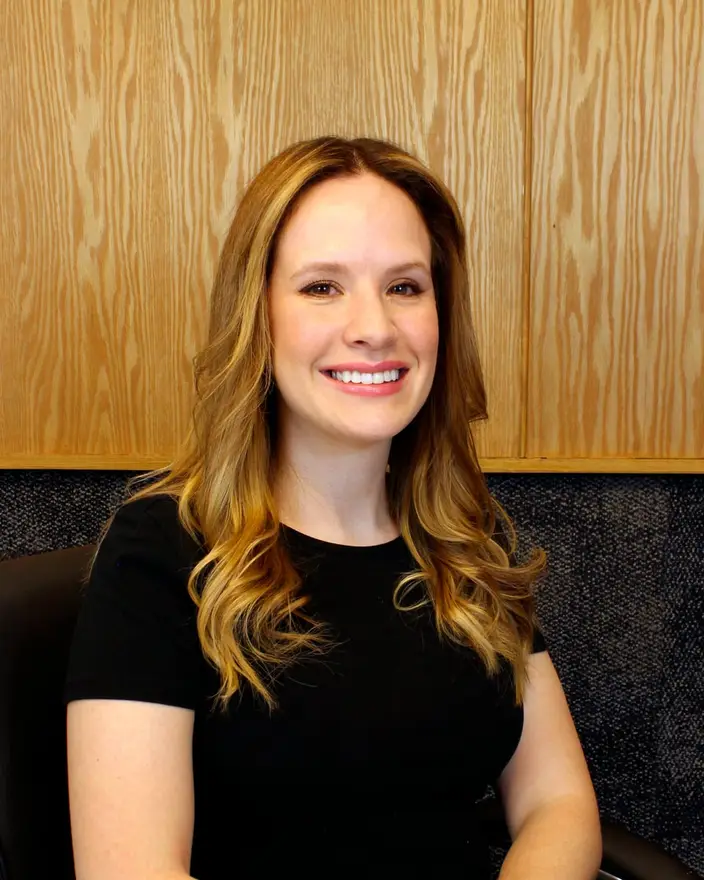
Melissa Gómez Hindle is a partner at G2 Investment Banking and at the group’s investment vehicles, G2 Momentum Capital and G2 Fintech Fund. She has been part of the firm’s team for more than nine years, leading financial advisory engagements and designing capital-raising and M&A strategies for startups and scaleups across Latin America.
From the financial advisory practice she supports companies in structuring their investment rounds, positioning themselves before venture capital funds and running strategic acquisition processes. She has taken part in multiple closed transactions in fintech, insurtech and SaaS. Her active relationship with venture capital funds gives her a view of both sides of a transaction: what the founder needs and what the investor requires.
She has been recognized in several editions by LAVCA, the Latin American private capital association, as one of the Top Women Investors in Latin American Tech, for her contribution to strengthening the region’s ecosystem.
She holds a degree in communication sciences from Tecnológico de Monterrey and a master’s in Business and Technology from Collective Academy, training that brings a strategic, technological and business perspective to her work with founders and investors.
The Chilean wellness and benefits platform buys Mexico’s Minu, an earned wage access and voucher provider, for USD 100 million in debt and stock according to Expansión and Diario Financiero; according to Ecosistema Startup, the amount was not disclosed.
Asaas’ fourth acquisition in five years folds a Brazilian broker of complex SME insurance into a base of more than 240,000 clients; the price was not disclosed and the target is an insurance vertical with BRL 130 million of revenue by 2029.
The largest residential brokerage in the United States absorbed the owner of Coldwell Banker, Century 21 and Corcoran with stock, USD 1 billion in convertibles and Anywhere’s debt on the balance sheet; antitrust let the transaction through despite objections from its own staff.
CoStar paid in cash, with no stock and no earn-out, for the new-home data and software provider that MidOcean Partners had controlled since 2019; a financial sponsor’s exit to a strategic buyer for a subscription business with net retention above 100%.
DoorDash completed the acquisition of Deliveroo in October 2025; consideration transferred was USD 3,724 million according to its 10-Q, with USD 1,981 million of goodwill, a reference for last-mile consolidation in Mexico.
eBay bought Depop from Etsy for USD 1.2 billion in cash plus about USD 200 million of adjustments and interest, around 1.2x 2025 gross merchandise sales, a reference for resale marketplaces in Mexico.
The Colombian mobility payments fintech buys Pluxee’s fleet fuel expense business in Colombia after more than a year of negotiation; the price was not disclosed and the company operates in Mexico with TeleVía.
The region’s first proptech unicorn buys the Mexico-based AI platform for brokerages; in our reading, the asset being priced is the broker network and its volume, not the software.
A neobank with more than 7 million users buys a digital mortgage originator with MXN 5 billion placed, in the year of the slowest growth in Mexican housing credit in two decades.
A Mexican healthtech with an insured book buys in-home operating capacity rather than building it; the price was not disclosed, but claims cost and readmissions explain the deal.
A digital carrier between the United States and Mexico buys a Y Combinator startup building artificial-intelligence agents to fold into its transport management system; second acquisition in four months and undisclosed terms.
One month after Jüsto suspended operations, Grupo OMNi acquired the shares of Jüsto USA at an undisclosed price and committed USD 100 million to restart the online supermarket, while FEMSA and General Atlantic exited the capital.
The J&F group’s digital bank bought an insurer, a pension entity and a capitalisation company at once, after approvals from Cade, SUSEP and the Central Bank; it is the largest ticket we recorded in the region’s digital insurance this period.
The largest mortgage originator in the United States absorbed the largest servicer in an all-stock transaction, conditioned by the FHFA to a 20% cap on Fannie Mae and Freddie Mac servicing; a reference for mortgage consolidation in Mexico.
Fourteen months after the announcement and four after Cofece’s approval, UPS reported it could not satisfy the closing conditions; the case shows where sales of Mexican operators to global strategic buyers break down.
Walmart Connect bought Vibe.co, a self-serve connected TV advertising platform with more than 10,000 advertisers, for an undisclosed price that The Wall Street Journal put at USD 1.4 billion, a reference for retail media in Mexico.
What a committee reads before deciding is not the deck. It is the model, the cap table and the quality of the answers once the questions stop being polite.
By Melissa Gómez Hindle · · 6 min read
Use of cookies
We use essential cookies so the site works and, only with your consent, anonymous analytics to understand which content is useful.